Chief Bromden's childhood, before the government acquisition
Chief Bromden's Childhood at the Falls
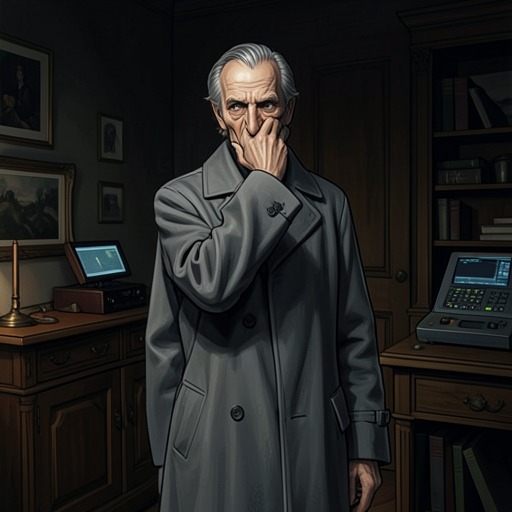
[Chief Bromden](entity:character-recall-character-chief-bromden-3554ae6a75dd) grows up in a [Columbia Gorge](entity:location-recall-location-columbia-gorge-a2cb4d515795) village, learning the rhythms of fishing, hunting, and family life beside the falls. His father, [Tee Ah Millatoona](entity:character-recall-character-c7b67fc74abb), is a respected leader whose name evokes a pine standing tallest on a mountain.
The memories establish what the later struggle over the village means: not simply land or money, but a way of living and a sense of identity that cannot be adequately priced.
During Chief Bromden's childhood
Government Appraisers Visit the Village
Government appraisers arrive to assess the village and its property. [Chief Bromden](entity:character-recall-character-chief-bromden-3554ae6a75dd), still a boy, understands their English and answers one of them, but the men treat him as if he had not spoken, turning their attention instead to the village and its supposed deficiencies.
A woman among the visitors proposes approaching the white wife, [Mary Louise Bromden](entity:character-recall-character-6e531c785dd8), rather than the Chief, anticipating that she may be easier to influence. Their calculated disregard of the boy foreshadows the institutional habit of making people invisible when their words obstruct a plan.
After the appraisers' visit and before Chief Bromden leaves home
The Village and Falls Are Taken
The government secures the village and the falls for a hydroelectric project, offering money and promises of progress. [Chief Bromden's father](entity:character-recall-character-chief-bromden-s-fat-fb756543b9d2) resists the idea that a man's life and home can be compensated for with a payment, but the pressure from officials, townspeople, and the changing tribe steadily diminishes his authority.
His mother, [Mary Louise Bromden](entity:character-recall-character-6e531c785dd8), also becomes part of the pressure surrounding him. [Chief Bromden](entity:character-recall-character-chief-bromden-3554ae6a75dd) remembers his father's eventual surrender and decline as an early example of the Combine's power to make a once-imposing person seem small.
After the loss of the village
Chief Bromden's Father Declines
[Chief Bromden's father](entity:character-recall-character-chief-bromden-s-fat-fb756543b9d2) drinks heavily after losing the struggle over the village and the falls. His son remembers him shrinking in spirit and body, until the family must take him from the cedars and bring him to [Portland](entity:location-recall-location-677b3cf47739), where he dies.
The memory gives [Chief Bromden](entity:character-recall-character-chief-bromden-3554ae6a75dd) a personal measure of what institutional pressure can do. He fears that the same forces that wore down his father will eventually break anyone who resists them, including McMurphy.
Before the novel's present and throughout Chief Bromden's long hospital stay
Chief Bromden's Years of Silence
[Chief Bromden](entity:character-recall-character-chief-bromden-3554ae6a75dd) is a formidable football player when young, but experiences of being ignored and treated as incapable teach him to retreat into silence. In the Army and later in the hospital, people assume he is deaf and dumb; he allows the assumption to protect him and to hear what they say when they think he cannot understand.
He has spent longer on the ward than any patient, enduring more than two hundred shock treatments and learning to understand the institution through images of machinery, wires, fog, and the Combine. His apparent helplessness is both a survival strategy and a measure of how deeply he has come to believe himself diminished.
Before and during the novel's opening days
The Ward's Mechanical Routine
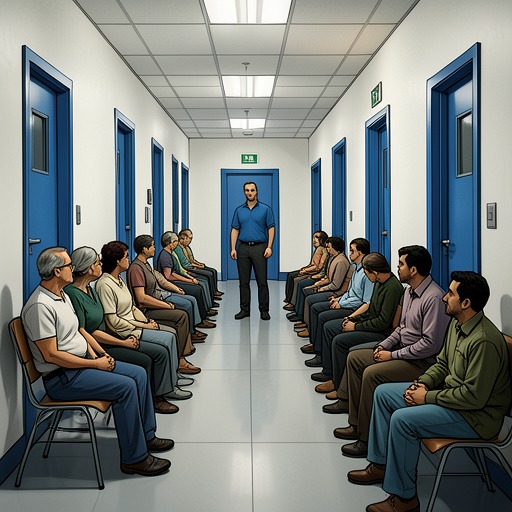
The ward runs on schedules, medication rounds, chores, and controlled movement. [Chief Bromden](entity:character-recall-character-chief-bromden-3554ae6a75dd) imagines the routine as a machine governed by [Order Daily Cards](entity:object-recall-object-order-daily-cards-c24c9c1d972b), while [Nurse Ratched](entity:character-recall-character-nurse-ratched-62d71e978158) watches the patients through glass and maintains a carefully managed atmosphere of discipline.
The Acutes and Chronics are kept apart, and the staff uses the fear of becoming a Chronic to pressure the Acutes into cooperation. The ward's claimed therapeutic order thus becomes a system for enforcing compliance and concealing institutional power.
The Monday morning before McMurphy's arrival
Chief Bromden Is Forced to Shave
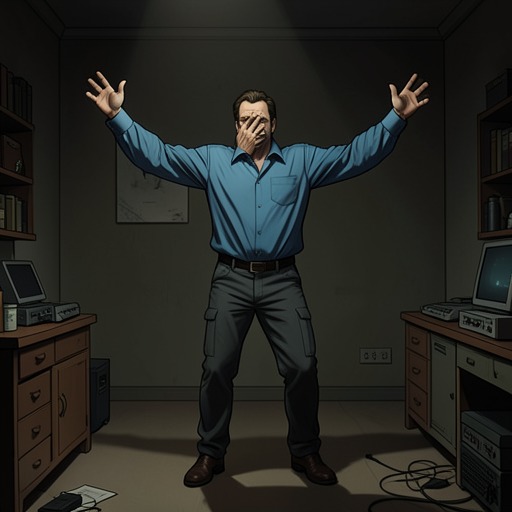
[Nurse Ratched](entity:character-recall-character-nurse-ratched-62d71e978158) orders [Chief Bromden](entity:character-recall-character-chief-bromden-3554ae6a75dd) to be shaved before breakfast, knowing the procedure frightens him. He hides in a mop closet, but the black aides find him and drag him to the shaving room.
When the shaver reaches his temples, Chief Bromden loses control and cries out as the ward's fog closes around him. The incident establishes both his terror of the hospital's machinery and the vulnerability that McMurphy will soon challenge.
The morning after Chief Bromden's forced shaving
McMurphy Enters the Ward
[Randle Patrick McMurphy](entity:character-recall-character-randle-patrick-mcmu-a905921efeea) arrives from [Pendleton Work Farm](entity:location-recall-location-pendleton-work-farm-cee39a546a44), swaggering into the day room with a loud greeting and an unrestrained laugh. He refuses to submit quietly to the admission shower and thermometer, and immediately begins meeting the patients as individuals.
His laughter sounds so unfamiliar that it unsettles the ward. To [Chief Bromden](entity:character-recall-character-chief-bromden-3554ae6a75dd), McMurphy appears large, energetic, and untouched by the Combine's usual methods of control.
The morning of McMurphy's arrival
McMurphy Shakes Chief's Hand
After introducing himself around the day room, McMurphy approaches [Chief Bromden](entity:character-recall-character-chief-bromden-3554ae6a75dd) and refuses to accept the claim that the Chief is deaf and dumb. He offers his hand and insists that Chief shake it, meeting the gesture with open respect rather than pity.
Chief Bromden feels the contact as a surge of blood and power. Their handshake begins a bond that helps Chief imagine he might be more than the silent, diminished figure the ward has made of him.
The day McMurphy arrives
Nurse Ratched Identifies a Threat
In the [Nurses' Station](entity:location-recall-location-6c709cf5e7d1), [Nurse Ratched](entity:character-recall-character-nurse-ratched-62d71e978158) calls McMurphy a manipulator and warns a junior nurse that he may disrupt the ward for his own purposes. She views smooth routines and patient compliance as essential to her authority.
[Chief Bromden](entity:character-recall-character-chief-bromden-3554ae6a75dd) imagines her influence as a network of fine wires connected to the staff and the hospital. Her private assessment reveals that she recognizes McMurphy as a challenge before the patients understand what his presence might change.
The first days after McMurphy's admission
The Ward's Patients and Precedents
[Chief Bromden](entity:character-recall-character-chief-bromden-3554ae6a75dd) describes the Acutes, who are considered treatable, and the Chronics, whom staff regard as permanent cases. He recalls [Ellis](entity:character-recall-character-ellis-31693732b397), whose repeated shocks left him nailed to the wall, and [Ruckly](entity:character-recall-character-ruckly-bd1bf1a2dda9), whose treatment returned him nearly mindless.
The ward has seen the consequences of resistance before. [Maxwell Taber](entity:character-recall-character-maxwell-taber-716ae709edad), a former Acute who questioned his medication, was forcibly treated and returned profoundly changed, making him a warning to anyone tempted to challenge the institution.
A remembered morning before McMurphy's arrival
Taber Refuses His Medication
[Maxwell Taber](entity:character-recall-character-maxwell-taber-716ae709edad) asks what the red capsules contain and refuses to swallow medication he does not understand. [Nurse Ratched](entity:character-recall-character-nurse-ratched-62d71e978158) treats his question as childish hostility rather than a legitimate concern and orders him away from the medication line.
The aides later overpower Taber, and the staff injects him and takes him for further treatment. [Chief Bromden](entity:character-recall-character-chief-bromden-3554ae6a75dd) imagines the capsule as a tiny electronic device, an image that expresses his conviction that the hospital installs obedience in its patients.
The night after McMurphy's arrival
Chief Dreams of the Machine Room
[Chief Bromden](entity:character-recall-character-chief-bromden-3554ae6a75dd) dreams that the dorm floor descends into a vast underground machine room. Workers haul the Chronic Blastic from his bed, hook him upside down, and cut him open, revealing rust and wires instead of blood and organs.
The [Public Relations man](entity:character-recall-character-public-relations-ma-3dc5cb1b177c) turns the scene into part of a tour, treating the patient's destruction as a spectacle. Chief is pulled from [the fog](entity:expression-recall-expression-the-fog-d39613e1b2e6) by [Turkle](entity:character-recall-character-fdee9d03bb10) and wakes to find that the event cannot be verified, but the nightmare crystallizes his sense that the hospital is a factory for the Combine.
The morning of his first day
McMurphy Meets the Acutes
McMurphy jokes that the ward needs a bull goose loony and declares that he intends to run the gambling. [Billy Bibbit](entity:character-recall-character-billy-bibbit-669c684aa7d6) points him toward [Dale Harding](entity:character-recall-character-dale-harding-215dc9e22286), president of the Patient Council, and their mock contest over who is the craziest loosens the Acutes' guarded mood.
McMurphy makes clear that he is a gambler and a habitual troublemaker who chose the hospital over the work farm. His performance is playful, but it also tests whether the patients can laugh and act without waiting for permission.
The morning of his first day
McMurphy Greets the Chronics
McMurphy shakes hands with patients across the ward, including [Ellis](entity:character-recall-character-ellis-31693732b397), [Ruckly](entity:character-recall-character-ruckly-bd1bf1a2dda9), [Colonel Matterson](entity:character-recall-character-colonel-matterson-5ed59977942e), and [Chief Bromden](entity:character-recall-character-chief-bromden-3554ae6a75dd). He addresses even the most disabled men as people capable of responding to him, rather than as objects or burdens.
The gestures unsettle the ward's divisions and offer the Chronics a moment of recognition. Chief watches McMurphy treat the patients as a community, although he cannot yet tell whether the friendliness is sincere or part of a gambler's strategy.
The first afternoon after his admission
McMurphy's First Group Meeting
At the meeting, [Nurse Ratched](entity:character-recall-character-nurse-ratched-62d71e978158) reads from Harding's file and turns his anxieties about his marriage into a public subject. McMurphy punctures the meeting's solemnity with jokes, then watches as the staff and patients interrogate Harding under the language of therapy.
He initially challenges the rules and makes [the doctor](entity:character-recall-character-6840e833b48f) laugh, but soon realizes that the meeting is not an open discussion. It is a managed process that invites patients to expose one another while preserving Nurse Ratched's control.
During the first group meeting
Pete Bancini Resists an Attendant
As [Nurse Ratched](entity:character-recall-character-nurse-ratched-62d71e978158)'s meeting continues, [Pete Bancini](entity:character-recall-character-pete-bancini-a4a733f864ae) rises and insists that he is tired. When an aide tries to remove him, [Pete](entity:character-recall-character-pete-20a13c365688) briefly becomes strong enough to strike the man down and tells the ward that he was born dead and cannot help his condition.
The moment of force drains him, and he returns to his exhausted, confused state. His brief resistance exposes a real pain beneath the ward's therapeutic routines, but the staff quickly quiets him and resumes the meeting.
After the first group meeting
McMurphy Sees the Pecking Party
McMurphy tells Harding that the meeting resembled a pecking party: patients flocked to attack one man while [Nurse Ratched](entity:character-recall-character-nurse-ratched-62d71e978158) initiated and directed the assault. Harding initially defends the process as therapeutic, but gradually admits that he and the others feel bullied and exposed.
Harding describes the patients as rabbits and the nurse as a wolf, explaining how shame and fear have taught them to submit. McMurphy rejects this as an excuse for surrender and urges the men to recover their ability to laugh and resist.
The afternoon after his first group meeting
McMurphy Bets Against Nurse Ratched
After learning how the ward's disciplinary rules constrain direct resistance, McMurphy offers to bet that he can get the better of [Nurse Ratched](entity:character-recall-character-nurse-ratched-62d71e978158) within a week without earning punishment. He solicits wagers from the Acutes and treats the challenge as both gambling and a public test of the nurse's supposed invulnerability.
The patients stake money they have been too afraid to use against the system. Their participation turns McMurphy's private bravado into a shared wager on whether authority can be made to show its limits.
The night of his first day
McMurphy's First Night on the Ward
McMurphy deals blackjack and jokes with the Acutes beneath the ward's constant recorded music. Although the patients are slow to laugh, his talk draws them into a game and briefly makes the room feel less tightly controlled.
That night he recognizes that [Chief Bromden](entity:character-recall-character-chief-bromden-3554ae6a75dd) has reacted to his words despite the deaf-and-dumb act. Their quiet exchange marks the beginning of a private trust and signals that Chief's silence is a choice rather than an incapacity.
The morning after his first night
McMurphy Brushes with Scouring Powder
McMurphy asks an aide for toothpaste before the cabinet is due to open and questions why it must be locked away. When the aide cites ward policy, McMurphy uses the available scouring powder instead and goes back to brushing his teeth.
The small act makes the rule look arbitrary without giving the staff a clear offense to punish. [Chief Bromden](entity:character-recall-character-chief-bromden-3554ae6a75dd) watches from the hall and takes pleasure in seeing the aide's authority unsettled.
The same morning
McMurphy Confronts Ratched in a Towel
McMurphy appears in the hall wearing only a towel and his cap, claiming his prison clothes have disappeared. [Nurse Ratched](entity:character-recall-character-nurse-ratched-62d71e978158) orders him back to the dorm and sends an aide for his green uniform, while McMurphy cheerfully prolongs the exchange.
When the towel drops, his whale-patterned shorts provoke a fresh flash of anger from the nurse. He has turned a routine clothing issue into a public contest, and the patients see that her composed authority can be frustrated without an immediate punishment.
The morning after the towel confrontation
McMurphy Wins Back the Cigarettes
McMurphy uses butter to make a bet about the mess-hall clock, then lets it slide down the wall until the time to leave arrives. The small trick wins his wager and gives the patients a shared joke at the expense of the ward's rigid schedule.
He later deals blackjack and lets the others win back the cigarettes they have lost. The gesture shows that his gambling can create fellowship as well as profit, though the patients have not yet learned to trust his motives.
The second day after McMurphy's admission
The Radio Dispute
McMurphy asks [Nurse Ratched](entity:character-recall-character-nurse-ratched-62d71e978158) to turn down the loudspeaker so the patients can talk and play cards. She answers that the older Chronics need the music and frames his request as selfishness, leaving him with no effective response except to accept her decision.
The encounter teaches him how the ward uses plausible concern for one group to deny another group any choice. He restrains his anger rather than giving the nurse grounds to punish him, and the patients begin to sense that the contest has started.
The following group meeting
The Carnival and Second Day Room
McMurphy and [Dr. Spivey](entity:character-recall-character-dr-spivey-9fe3b82579a2) raise the possibility of a ward carnival, giving the patients a chance to imagine a collective event beyond the regular schedule. [Nurse Ratched](entity:character-recall-character-nurse-ratched-62d71e978158) diverts the proposal to a staff meeting, effectively stopping it before plans can begin.
McMurphy then backs a proposal for the unused tub room to become a second day room, separating card players from patients who want the radio. Dr. Spivey supports the idea, and the group agrees to try it despite Nurse Ratched's objections about staffing.
Soon after the second day room opens
McMurphy's Attempt to Lift the Panel
In the tub room, McMurphy argues that the heavy control panel might be movable and bets the Acutes that he can lift it. He strains until his hands bleed, but the panel barely shifts, and he collapses without accomplishing what he promised.
Rather than retreating behind excuses, he tells the patients that at least he tried. The failure becomes a test of courage more than strength, though [Chief Bromden](entity:character-recall-character-chief-bromden-3554ae6a75dd) later understands that McMurphy's wager has left the men feeling manipulated.
The week before the World Series
The World Series Vote Fails
McMurphy asks the Acutes to vote to move chores so they can watch the World Series during the day. Most of the patients remain silent or raise their hands timidly, and the proposal fails to gather meaningful support.
Their reluctance angers McMurphy, who sees how thoroughly fear has trained them to surrender even when the risk seems small. [Billy Bibbit](entity:character-recall-character-billy-bibbit-669c684aa7d6) explains that patients who have spent years in the hospital cannot act as freely as McMurphy, whose own stay may be brief.
The day before the World Series
The Window Challenge
Frustrated by the patients' caution, McMurphy boasts that he could break through a ward window and escape. When the others point out that the mesh is reinforced, he proposes lifting the heavy tub-room control panel and throwing it through instead.
The challenge turns into another wager, and the patients bet that he cannot lift it. His renewed attempt fails, but the sight of him straining for something everyone believes impossible becomes a more lasting example than his earlier bravado.
Friday of the World Series opening game
The World Series Sit-In
At the meeting, [Nurse Ratched](entity:character-recall-character-nurse-ratched-62d71e978158) counts only the twenty Acutes who vote for changing television time and declares the proposal defeated because the ward requires a majority of all patients. McMurphy protests that the Chronics cannot vote meaningfully, then goes among them seeking support.
[Chief Bromden](entity:character-recall-character-chief-bromden-3554ae6a75dd) raises his hand, making the count twenty-one. The nurse still closes the vote, but McMurphy leads the patients to sit before the switched-off television as if the game were on. The silent protest brings the Acutes together and forces the staff to witness a refusal they cannot easily punish.
Immediately after the television sit-in
The Staff Keeps McMurphy on the Ward
[Nurse Ratched](entity:character-recall-character-nurse-ratched-62d71e978158) calls a staff meeting to consider McMurphy's disruptive influence. Residents argue that he is dangerous and recommend sending him to the [Disturbed Ward](entity:location-recall-location-disturbed-ward-1d4b2e6d044d), partly because they fear confronting him themselves.
Nurse Ratched rejects the transfer. She believes removing him would make him a martyr and predicts that, given time, he will expose himself as an ordinary coward. Her decision turns the conflict into a long contest in which she expects the institution's power and patience to wear him down.
The night after the television protest
Chief Sees Beyond the Fog
For the first time in years, [Chief Bromden](entity:character-recall-character-chief-bromden-3554ae6a75dd) wakes to a clear dormitory and walks barefoot to a window. He sees the autumn moon, a young dog roaming the grounds, and [Canada geese](entity:creature-recall-creature-6f4986c52399) crossing the sky.
The ordinary scene reaches him with startling clarity, and he recognizes that [the fog](entity:expression-recall-expression-the-fog-d39613e1b2e6) has not always been an unavoidable feature of the world. This moment begins his movement out of the protective haze in which he has hidden himself.
Several weeks after the first television vote
McMurphy Learns the Cost of Commitment
At the hospital swimming pool, McMurphy learns from the lifeguard that patients who are committed have no fixed release date. The lifeguard has spent years waiting for a nurse to approve his recovery, though he believes he could work outside the hospital.
McMurphy realizes that [Nurse Ratched](entity:character-recall-character-nurse-ratched-62d71e978158) can keep him there indefinitely. He stops provoking her as openly, begins doing ward chores, and withdraws his support when [Cheswick](entity:character-recall-character-cheswick-723e52146db5) protests the cigarette rationing, choosing his own chance of release over continued resistance.
The day after McMurphy learns of indefinite commitment
Cheswick Protests the Cigarette Ration
[Cheswick](entity:character-recall-character-cheswick-723e52146db5) demands that the ward stop rationing the patients' cigarettes and looks to McMurphy for support. McMurphy keeps his eyes on his cards and says nothing, leaving Cheswick isolated in front of [Nurse Ratched](entity:character-recall-character-nurse-ratched-62d71e978158) and the other Acutes.
The aides restrain Cheswick and take him to the [Disturbed Ward](entity:location-recall-location-disturbed-ward-1d4b2e6d044d). Although he returns later, the public abandonment shows the cost of McMurphy's retreat and deepens the patients' understanding that Nurse Ratched can exploit their fear of being left alone.
Later the same day
Cheswick Drowns in the Pool
During the swimming period, [Cheswick](entity:character-recall-character-cheswick-723e52146db5)'s fingers become caught in the grate over the pool drain. The lifeguard, McMurphy, and the aides cannot free him until they fetch tools and dismantle the grate.
By the time they pull him from the water, Cheswick has drowned. His death makes the consequences of the ward's helplessness immediate and personal, and intensifies McMurphy's awareness of what his withdrawal has allowed.
After Cheswick's death
Sefelt Has a Seizure
[Sefelt](entity:character-recall-character-sefelt-102213cb5962) collapses in the lunch line with a seizure after avoiding his [Dilantin](entity:object-recall-object-dilantin-967bba3053f4). [Nurse Ratched](entity:character-recall-character-nurse-ratched-62d71e978158) presents the fit as proof that he must take the medication, while [Bruce Fredrickson](entity:character-recall-character-6826925f2cf6) tries to explain Sefelt's fear of the drug's effects on his teeth and hair.
The scene leaves McMurphy troubled by a choice in which treatment itself carries harm. He sees that the ward's rules do not offer patients a clean way to protect themselves, only competing risks managed by staff.
A few days after Cheswick's death
McMurphy Learns the Acutes Are Voluntary
While waiting for chest X-rays, McMurphy learns from Harding that most of the Acutes, including Harding, are voluntary patients and can leave if they choose. McMurphy is one of the few men on the ward whose commitment is involuntary.
He confronts the patients about why they remain when they could go, and Billy breaks down, explaining that fear and his mother's influence make leaving feel impossible. McMurphy's assumption that the men are simply choosing the hospital gives way to a fuller understanding of how shame and dependence confine them.
The night after the commitment confrontation
Chief Speaks to McMurphy
[Chief Bromden](entity:character-recall-character-chief-bromden-3554ae6a75dd) talks with McMurphy in the dormitory, first explaining that he cannot afford the fishing trip and then telling him about his father, the village, and the Combine. He describes how the government and the surrounding community diminished his father until he surrendered and drank himself to death.
McMurphy listens without dismissing Chief's account, though he calls the speech crazy in a way that does not deny its meaning. Chief's voice has returned, and he begins to recognize that his silence was imposed on him by others as much as chosen by himself.
The same night, before the fishing trip
McMurphy Invites Chief Fishing
McMurphy invites Chief to join the planned fishing excursion and promises to help him regain the size and strength he believes he has lost. He asks Chief whether he could once have lifted the heavy control panel in the tub room.
Chief says that he probably could have, and McMurphy turns the answer into a private bargain: Chief can join the trip without money if he follows a strength-building plan. His encouragement challenges Chief's shrunken self-image and creates a promise that will matter later.
The morning of the fishing trip
Chief Breaks His Silence Publicly
When the black aides mock Chief's name on the fishing list and order him to sweep, he turns away instead of obeying. He has never openly defied them before, and the choice frightens him even as it gives him a first taste of independence.
McMurphy's commotion in the dorm distracts the aides, allowing Chief to keep his place on the crew list. His refusal marks a small but decisive shift from passive concealment toward action.
The morning of the fishing trip
George Joins the Fishing Crew
McMurphy discovers that [George Sorensen](entity:character-recall-character-26c7a02fe4ef) has spent years fishing for salmon and persuades him to come as the crew's captain. George is reluctant because of his contamination fears, but McMurphy counters [Nurse Ratched](entity:character-recall-character-nurse-ratched-62d71e978158)'s warnings about the dangerous sea and offers him a reduced fare.
George accepts the final place on the list. His knowledge of boats will prove essential, and his decision shows McMurphy using encouragement and practical bargaining to draw a withdrawn patient back into a shared undertaking.
The morning of the fishing trip
The Patients Leave the Hospital
[Candy](entity:character-recall-character-acdc802b0971) arrives, but her friend Sandra cannot make it, leaving McMurphy short of a second driver for the crew. [Nurse Ratched](entity:character-recall-character-nurse-ratched-62d71e978158) points out the problem and the money McMurphy has collected, but McMurphy persuades [Dr. Spivey](entity:character-recall-character-dr-spivey-9fe3b82579a2) to join the outing by drawing him into talk of fishing.
The patients load into [the doctor](entity:character-recall-character-6840e833b48f)'s cars and leave the grounds. Their first moments outside are uneasy, as townspeople stare at their green uniforms and the men struggle to feel at home in public.
The day of the fishing trip, at the coast
The Crew Claims the Fishing Boat
At the dock, the boat captain refuses to take the patients out without a signed waiver. A group of local men mock [Candy](entity:character-recall-character-acdc802b0971) and the patients, and the crew's earlier bravado drains away as they fail to defend her.
McMurphy returns from the bait shop announcing that the trip is ready and leads everyone aboard before the captain can stop them. The escape from the dock's humiliation begins a day in which the patients will discover courage through shared action rather than performance.
During the fishing trip
The Patients Catch Salmon
Once the boat is away from shore, George directs the crew as the men learn to rig lines and work the poles. Several patients hook fish, and Chief catches a large salmon after a fierce struggle with the line.
The excitement draws the men into practical cooperation and restores Chief's sense of physical presence. McMurphy laughs from the cabin as the crew fumbles, recognizing that humor can acknowledge pain without allowing it to dominate the moment.
Later during the fishing trip
The Doctor Lands a Huge Fish
[Dr. Spivey](entity:character-recall-character-dr-spivey-9fe3b82579a2) refuses to give up on a powerful fish at the end of his line, even as the weather worsens. The others help him bring the enormous halibut aboard after a long struggle.
The doctor, usually timid under [Nurse Ratched](entity:character-recall-character-nurse-ratched-62d71e978158)'s authority, has persisted in an effort of his own. The catch becomes a shared triumph, and the crew returns to shore with a new sense of what they can accomplish together.
The return from the fishing trip
The Crew Defies the Dockside Men
After navigating rough water back to the dock, the patients face the captain, police, and local hecklers. The doctor argues that the trip was a lawful expedition, while George's skilled docking and the crew's successful catch change how the townspeople regard them.
The men who mocked [Candy](entity:character-recall-character-acdc802b0971) now treat the patients with respect. The change is not a cure, but the crew returns to the hospital having experienced a public moment in which their dignity was not determined by their uniforms.
The evening after the fishing trip
Chief Remembers McMurphy's Exhaustion
On the drive back, McMurphy asks to pass the house where he once lived and tells the crew a story from his childhood. In the windshield's reflected light, Chief catches a rare glimpse of McMurphy looking exhausted and strained beneath his familiar easy manner.
The sight complicates Chief's image of McMurphy as inexhaustible. McMurphy gives the patients a lively story of his past, but he is carrying a private weariness that the others do not yet recognize.
The day after the fishing trip
Nurse Ratched Questions McMurphy's Motives
[Nurse Ratched](entity:character-recall-character-nurse-ratched-62d71e978158) posts a record of the patients' financial dealings, emphasizing that McMurphy has profited while the others have lost money. She argues that his gambling and organization of activities may serve his own interests rather than generosity.
The patients begin to wonder whether his actions have been a con. The attack does not erase what he has done for them, but it makes their trust less secure and prepares the ground for a deeper test of their solidarity.
About a week after Nurse Ratched posts the financial record
The Patients Debate McMurphy's Motives
[Nurse Ratched](entity:character-recall-character-nurse-ratched-62d71e978158) discusses McMurphy in a group meeting while he is absent, listing his winnings and suggesting that his generosity is merely calculated self-interest. Harding answers that McMurphy has never hidden his desire to gamble and argues that the patients still received something from his schemes.
Billy remains reluctant to believe that McMurphy's help is only a con. When McMurphy later asks Billy to contribute money for [Candy](entity:character-recall-character-acdc802b0971)'s visit, however, Billy begins to share the others' suspicion, and the hero's motives become harder to read.
After the fishing trip and before the special showers
Chief Lifts the Control Panel
McMurphy tells Chief that he has grown stronger and persuades him to test himself against the heavy control panel. Chief lifts it far enough to shift it from its moorings, proving to himself that his former strength has not vanished.
McMurphy then keeps the feat secret and uses it to entice the other patients into betting that no one can move the panel. Chief realizes that McMurphy is again making money, and his disappointment reveals that he had hoped the act would be only about helping him.
The day after the panel wager
The Special Shower Humiliates George
After the fishing trip, [Nurse Ratched](entity:character-recall-character-nurse-ratched-62d71e978158) orders the crew to take a special shower on suspicion of vermin. When the aides reach George, they threaten him with treatment for lice and crabs and smear the salve onto his body despite his pleas.
The other patients recognize that George's vulnerability gives the aides an excuse to humiliate him. McMurphy finally intervenes, but the aide refuses to stop, turning the shower into a direct confrontation.
Immediately after George is forced into the shower
McMurphy and Chief Fight the Aides
When an aide continues to assault George, McMurphy steps between them and refuses to yield. He provokes the aide into striking him, then fights back as the patients form a ring around the struggle; Chief joins in and throws another aide into the shower.
The fight ends when additional staff arrive and restrain McMurphy and Chief. The patients call it a victory, but the men are taken to the [Disturbed Ward](entity:location-recall-location-disturbed-ward-1d4b2e6d044d), and the conflict gives the hospital a pretext for harsher punishment.
The morning after the shower-room fight
McMurphy and Chief Receive Shock Treatment
[Nurse Ratched](entity:character-recall-character-nurse-ratched-62d71e978158) offers McMurphy the chance to admit fault and avoid shock treatment, but he refuses and mocks the demand. Chief returns his own medication cup as well, and both men are taken to the [Shock Shop](entity:location-recall-location-shock-shop-3ef365587d4b).
McMurphy jokes and sings as he is strapped to the table, then tells Chief something through the rubber bite block before the current hits. Chief undergoes the treatment too, entering a confused state filled with memories, images, and the sound of the cuckoo's nest rhyme.
Later the same day
Chief Fights Through the Shock Fog
Chief emerges from the shock-induced fog sooner than he has after previous treatments. He struggles to recover his sense of self rather than surrendering to confusion, and he knows that this will be his last shock treatment.
McMurphy endures further shocks and keeps refusing to confess or give in. His defiance strengthens his standing among the men, even as Chief begins to understand that the treatments are taking a physical and emotional toll.
The end of the week after the shock treatments
McMurphy Returns as a Hero
Chief returns from the [Disturbed Ward](entity:location-recall-location-disturbed-ward-1d4b2e6d044d) to find the Acutes eager to hear about McMurphy. They laugh at the stories Chief tells, and [Nurse Ratched](entity:character-recall-character-nurse-ratched-62d71e978158)'s attempt to portray McMurphy as unresponsive to treatment is met with a joke about how readily he makes contact with her.
Because McMurphy has been out of sight, the patients imagine him growing stronger rather than weaker. Nurse Ratched recognizes that this legend threatens her control, and she arranges to bring him back where the men can see his condition.
Before McMurphy's return from the Disturbed Ward
The Patients Plan McMurphy's Escape
Harding, [Scanlon](entity:character-recall-character-scanlon-3bc0434c2056), [Fredrickson](entity:character-recall-character-fredrickson-a5af3fb7f81f), and Chief discuss helping McMurphy escape before repeated shock treatments diminish him. Their plan is to start a fire and use the arrival of the firemen to get him out of the hospital.
They intend to act that night, but the plan competes with McMurphy's desire to remain for Billy's scheduled meeting with [Candy](entity:character-recall-character-acdc802b0971). The patients have become willing to help him, yet they still follow his lead rather than deciding the timing themselves.
The day McMurphy returns to the ward
Nurse Ratched Proposes Lobotomy
Back on the ward, McMurphy jokes through [Nurse Ratched](entity:character-recall-character-nurse-ratched-62d71e978158)'s proposal for more drastic treatment. She finally raises the possibility of an operation intended to eliminate aggression, and McMurphy answers with absurd claims about replacement body parts.
The exchange conceals the danger beneath his humor. The patients recognize that Nurse Ratched is considering lobotomy, while McMurphy postpones escape so Billy can meet [Candy](entity:character-recall-character-acdc802b0971) and the ward can have one more night of celebration.
The night McMurphy returns to the ward
The Midnight Party
McMurphy, Billy, and the patients welcome [Candy](entity:character-recall-character-acdc802b0971) and [Sandy](entity:character-recall-character-d121b3c6a80a) through a ward window after hours. They drink cough syrup mixed with alcohol, explore the records and medicine room, joke, dance, and play in the dark, while [Turkle](entity:character-recall-character-fdee9d03bb10) helps them keep the party from being discovered.
For Chief, the night demonstrates that the Combine's rules can be breached and that the men can create joy for themselves. The celebration is reckless, but it gives the ward a vivid experience of collective freedom before the consequences arrive.
The morning after the midnight party
Ratched Finds Billy With Candy
[Nurse Ratched](entity:character-recall-character-nurse-ratched-62d71e978158) discovers [Billy Bibbit](entity:character-recall-character-billy-bibbit-669c684aa7d6) and [Candy](entity:character-recall-character-acdc802b0971) together in the Seclusion Room. Billy is initially calm and proud, but the nurse invokes his mother and threatens to tell her, striking directly at his dependence and shame.
Billy's confidence collapses. He stutters, blames McMurphy and the other patients, and is led to [the doctor](entity:character-recall-character-6840e833b48f)'s office while Nurse Ratched assures him that she will explain the incident to his mother.
Minutes after Nurse Ratched takes Billy to the doctor's office
Billy Bibbit Dies
The doctor discovers Billy has cut his throat with instruments from the desk. His death follows the shame and panic triggered by [Nurse Ratched](entity:character-recall-character-nurse-ratched-62d71e978158)'s threat to expose him to his mother.
Nurse Ratched blames McMurphy for gambling with human lives, but the accusation deepens rather than resolves the horror. The ward's laughter disappears, and McMurphy understands that the patients' need for him has helped keep him in a contest that is destroying him.
Immediately after Billy's death
McMurphy Attacks Nurse Ratched
McMurphy rises from his chair and attacks [Nurse Ratched](entity:character-recall-character-nurse-ratched-62d71e978158), tearing her uniform and putting his hands around her throat. Staff members pull him away, and the assault leaves the nurse badly injured and unable to maintain her former image of invulnerable composure.
The violence is not a victory without cost: McMurphy is taken away for further treatment, and the ward sees the confrontation as the culmination of the struggle he has carried for them. Chief recognizes that the patients' dependence helped drive him into the final round.
The weeks after McMurphy's attack
The Ward's Authority Weakens
While [Nurse Ratched](entity:character-recall-character-nurse-ratched-62d71e978158) is away recovering, patients leave the ward, transfer elsewhere, or take greater control of daily decisions. Harding reopens the tub room and begins dealing cards, and the ward's policies no longer command the same unquestioned obedience.
When Nurse Ratched returns with a damaged face and a bandaged throat, she communicates by writing. Her authority has been visibly reduced, and the patients no longer accept her claim that McMurphy will simply return unchanged.
About three weeks after McMurphy is taken away
McMurphy Returns After Lobotomy
A gurney is brought into the day room bearing McMurphy's name and a chart marked postoperative lobotomy. His scars and tattoos remain, but the man on the stretcher has a blank, vacant face and no sign of his former humor or will.
The patients recognize the bodily likeness but cannot accept it as McMurphy in any meaningful sense. [Nurse Ratched](entity:character-recall-character-nurse-ratched-62d71e978158) has made him an example of what resistance can cost, leaving Chief with the knowledge that the ward's victory over her cannot restore the person she destroyed.
The night McMurphy returns from the operation
Chief Kills McMurphy
After listening to McMurphy's breathing and watching his blank eyes in the moonlight, Chief decides that he cannot leave him alive as a permanent display of [Nurse Ratched](entity:character-recall-character-nurse-ratched-62d71e978158)'s power. He smothers McMurphy with a pillow and closes his eyes afterward.
The act is an expression of grief and a refusal to let the institution preserve McMurphy as a cautionary object. Chief takes responsibility for ending the life that the lobotomy has emptied of the qualities he loved.
Immediately after McMurphy's death
Chief Escapes the Hospital
Chief goes to the tub room and lifts the heavy control panel, this time carrying it to the window. He smashes through the reinforced screen and escapes into the moonlit grounds before the aides can stop him.
He runs toward the highway and catches a ride north, considering a journey to [Canada](entity:location-recall-location-canada-a93ef5aae6af) but first hoping to return to the Columbia and see what remains of his old community. The escape completes his movement from silence and diminished selfhood toward a freedom he must now define for himself.